School of Engineering and Technology
B.Tech (Internet of Things)
A programme at the intersection of hardware, software, and connectivity – training engineers who build smart devices, sensor networks, edge computing systems, and the cloud infrastructure that powers Industry 4.0 and smart cities.
About the Programme
IoT engineers build the nervous system of the modern world – sensors in factories, smart home devices, autonomous vehicles, and healthcare wearables. This programme uniquely combines embedded systems programming, wireless communication protocols, cloud integration, and data analytics in one curriculum. The dedicated IoT Lab is equipped with Raspberry Pi clusters, Arduino, ESP32, FPGA boards, sensor arrays, LoRaWAN gateways, and 3D printers for enclosure design. Graduates work in manufacturing automation, aerospace, defence, healthcare robotics, and smart city projects.
Programme Details
Course at a Glance
180
8 Semesters
Internet Of Things
60
Engineering and Technology
Programme Structure
YEAR I - COMPUTING AND ELECTRONICS
Foundations for IoT
Electronics and Circuit Fundamentals · Embedded C Programming · Digital Logic Design · Python for IoT · Computer Networks Basics · Sensor Technology Introduction · Human Values · AI Literacy
YEAR II - EMBEDDED AND CONNECTED SYSTEMS
Building smart devices
Microcontrollers and Microprocessors · RTOS · Wireless Communication (WiFi, BLE, Zigbee, LoRa) · Cloud Platforms for IoT · Data Structures · Operating Systems · DBMS for IoT
YEAR III - EDGE AND CLOUD IOT
Systems at scale
Edge AI and TinyML · Industrial IoT · Smart City Systems · Computer Vision for IoT · IoT Security · 2 Electives · Internship (mandatory) · IoT Product Prototyping
YEAR IV - PRODUCT AND CAPSTONE
From prototype to product
IoT Capstone Project – full product development (two semesters) · Advanced Electives · Industry Certification: AWS IoT / Azure IoT / Cisco IoT · Startup Studio · Entrepreneurship Lab
Specialisations - 5 Tracks
SMART HOME AND CONSUMER IOT
Home Automation · Voice Assistants · Energy Management · Smart Appliances
INDUSTRIAL IOT (IIOT)
Predictive Maintenance · SCADA Systems · Digital Twin · Manufacturing 4.0
SMART CITY SYSTEMS
Traffic Management · Waste Monitoring · Air Quality · Street Lighting Control
HEALTHCARE IOT (IOMT)
Wearables · Remote Patient Monitoring · Smart Diagnostics · Hospital Automation
AGRICULTURAL IOT
Precision Farming · Soil Sensors · Drone-based Monitoring · Irrigation Control
Themes
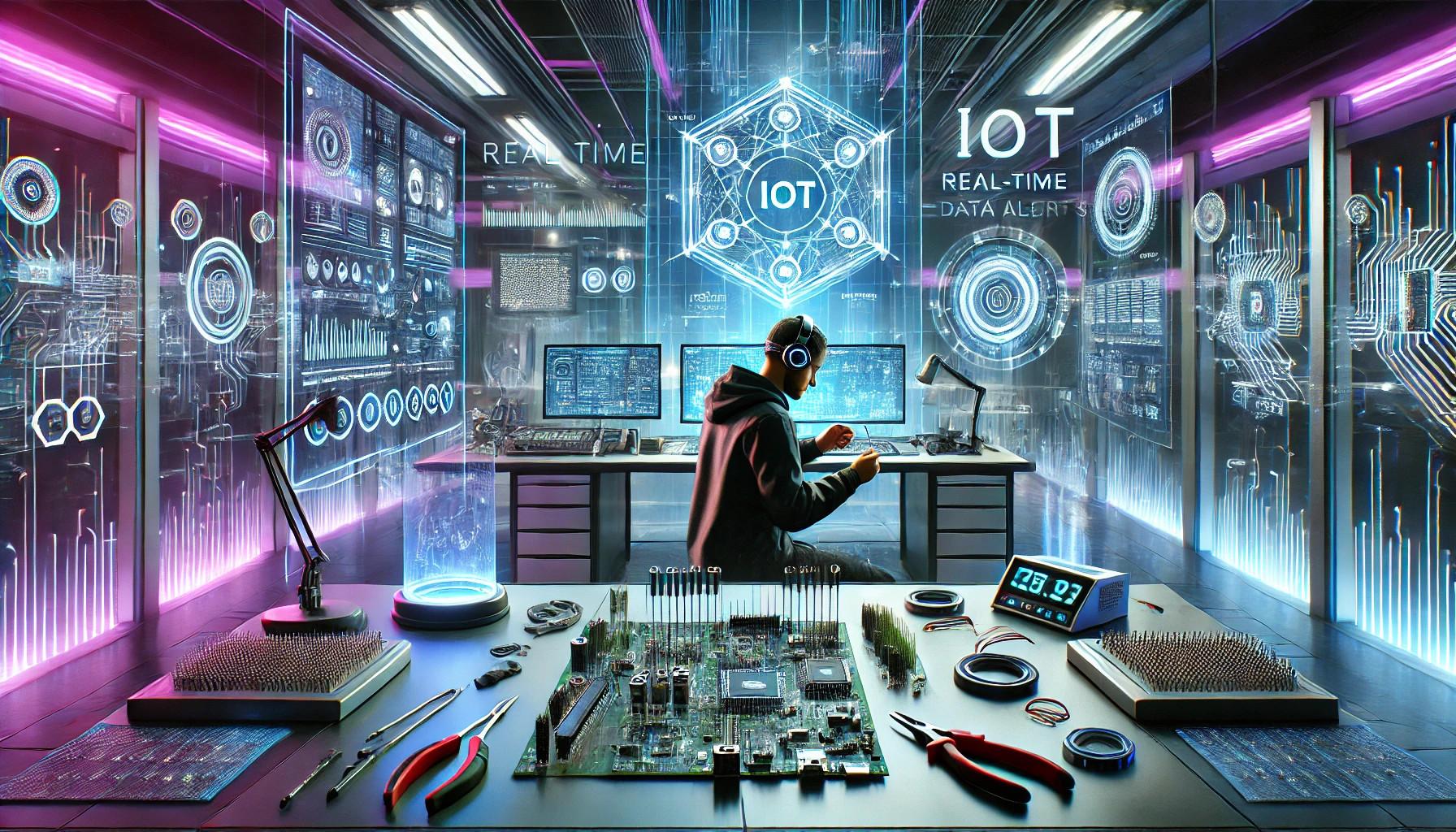
Hardware–Software Co-design
Students learn both embedded hardware (Arduino, Raspberry Pi, ESP32, FPGA) and cloud software stacks (AWS IoT Core, Azure IoT Hub, MQTT brokers) in an integrated curriculum.
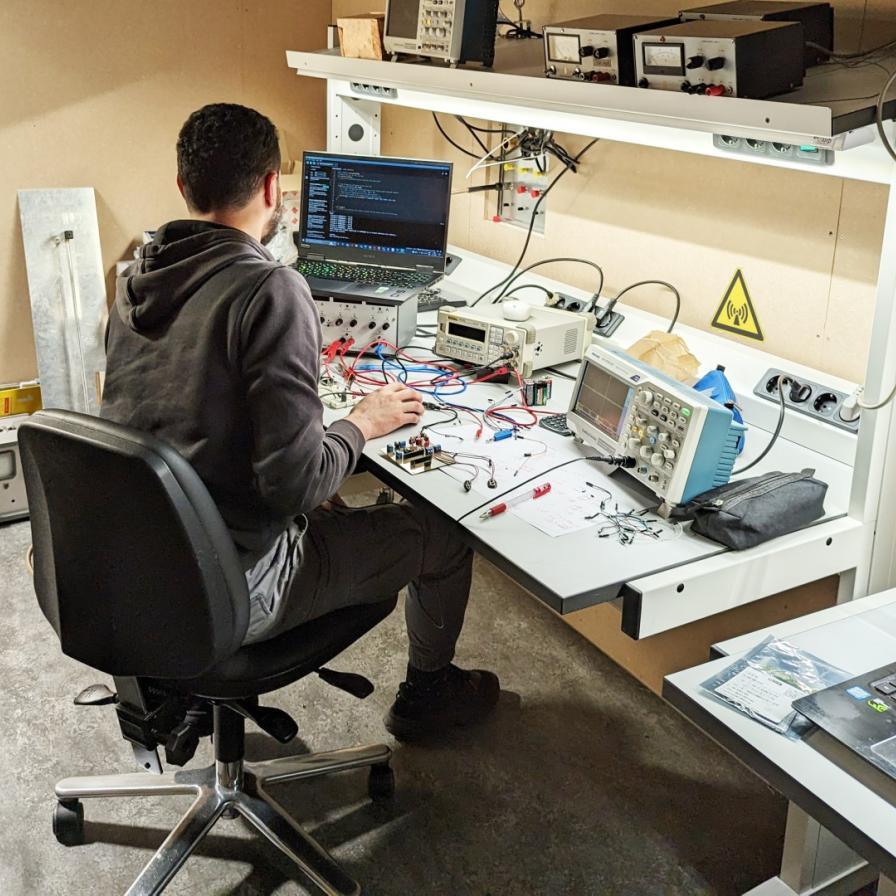
Dedicated IoT Prototyping Lab
Fully equipped IoT lab with 60+ sensor types, LoRaWAN gateways, FPGA boards, Raspberry Pi clusters, 3D printers for enclosure design, and industry-grade testing equipment.

Product Development Mindset
The capstone is a working IoT product with hardware, firmware, cloud backend, and user interface—defended before an industry jury, not just a faculty committee.

Security built-in, not bolted-on
IoT Security—device authentication, secure boot, OTA updates, and communication encryption—is taught as a core subject throughout the programme.
Eligibility Criteria
| Criterion | Requirement |
|---|---|
Qualifying exam | 10+2 (Class XII) from any recognised board |
Mandatory subjects | Physics, Chemistry, Mathematics (PCM) |
Minimum marks | 10+2 with a minimum 55%, including Physics, Chemistry and Mathematics |
Entrance exam | Valid JEE Main score OR Metro University MET |
Preferred | Students with strong Mathematics background, computing interest, or Olympiad exposure |
Selection | JEE Main / MET → Counselling → Seat allotment |
Frequently Asked Questions
Is there a lot of hardware involved?
Yes – this is one of the most hardware-involved computing programmes. Students solder, prototype circuits, program microcontrollers, and build physical devices regularly.
What programming languages will I learn?
Embedded C, Python, MicroPython, and JavaScript for IoT dashboards. Students also learn MQTT, REST APIs, and cloud SDKs (AWS Boto3, Azure SDK).
What industries hire IoT engineers?
Automotive, manufacturing, smart cities, healthcare, agriculture, consumer electronics, and defence. Companies include Bosch, Honeywell, Siemens, Tata Motors, and emerging IoT startups.
Is the capstone a research report or a real product?
It is a real working IoT product – hardware prototype, cloud backend, user interface, and documentation.