

You can decide on a future career when choosing one of the engineering branches. B.Tech Cyber Security is one of the engineering disciplines where you can focus your studies in the fields of technology, puzzles, and digital safety. As businesses move more and more to online platforms, data security becomes very important, and cybersecurity becomes a necessity. It could be a question of why someone is interested in learning cybersecurity. But what are the career options available in this field for India?
What Does B.Tech Cyber Security Cover?
Cybersecurity refers to detecting vulnerabilities within systems, monitoring suspicious activities, and also preventing sensitive data from being accessed by unauthorized people. It cannot simply be achieved via adding antivirus software to your computer; it can also involve passwords. Students are introduced to various fields of security, and each of these areas has its own set of duties and tasks.
Ethical Hacking and Network Security
Ethical hacking refers to the controlled testing of websites, apps, and computer systems for the purpose of finding vulnerabilities in security. Experts then utilize these vulnerabilities as a means to enable organizations to close security loopholes well before someone might exploit them.
Network security, on the other hand, is primarily concerned with how to safeguard devices and systems that are interconnected. Some tools in this field that network security professionals employ are firewalls, encryption, access controls, and safe network setup.
SOC Analysis and Threat Monitoring
A Security Operations Center (SOC) is responsible for monitoring an organization’s digital world for potential threats. The responsibilities include receiving and processing security incidents, conducting security investigations, and working with the team to respond when a threat has been detected. The knowledge and skills to work with Security Information and Event Management (SIEM) platforms like Splunk and IBM QRadar are highly desirable for this job.
Cloud Security and Digital Forensics
Along with the shift made by businesses to cloud platforms, protecting data has become equally significant. In cloud security, managing access rights, monitoring configurations regularly, and stopping suspicious activities are some key parts of keeping data secure.
Digital forensics focuses on digital devices. Such an investigation requires analyzing computers, mobile phones, and any other form of digital storage to get an image of the situation and secure the evidence in case a court or law enforcement is interested in pursuing it.
Career Opportunities After B.Tech Cyber Security
Another reason to pursue a degree in cybersecurity is the freedom it gives you: rather than sticking to one path as many degrees do, you’ll be able to try out different jobs.
A few of the regular roles on offer are:
- SOC Analyst: Keeps tabs on security notices and does deep-dive checks into possible threats.
- Ethical hacker: Proactively exposes vulnerabilities in a system.
- Network Security Engineer: Protects and develops networks through secure computing.
- Cloud Security Engineer: Assists in securing the cloud environment and the programs.
- Digital Forensics Analyst: During the investigation process, this person looks at the data to make sure there is nothing wrong.
- GRC Analyst: Focuses on security policies, risk evaluation, & regulatory adherence.
Banks, hospitals, information technology companies, online business organizations, and even the government have all valid reasons for spending money on cybersecurity.
Skills Needed to Build a Career in Cyber Security
If students aspire to work in the cybersecurity area, they cannot rely on classroom training solely. They should learn by experimenting with real-life system behavior and hands-on techniques.
Some of the key skills that students can develop are
- Understanding of computer networks and OS (such as Linux and Windows).
- Gaining basic programming concepts, with a focus on Python.
- Understanding of security concepts such as cryptography, vulnerability assessment, and penetration testing.
- Learning SIEM tools, incident management software, reporting tools, and cloud technologies.
- Developing an analytical way of thinking and working on problem-solving skills with patience.
Hands-on experience through small-scale security project execution, participation in Capture the Flag competitions, and internship programs provides a practical touch to the theory concepts students learn and helps them better prepare for work in this area.
What Salary Can Cyber Security Graduates Expect in India?
Your salary is influenced by various factors such as your role, technical skill sets, company culture, and work location. It is possible that a fresh graduate in SOC monitoring or a security analyst role may get hired with a package of approximately ₹4–8 lakhs per year. As professionals gain experience, roles like penetration testing and cloud security may provide better compensation packages.
These numbers are just estimates and might differ in actual situations. Candidates with hands-on practical knowledge and relevant certifications may have a slight edge in the interview stage.
How India’s Data-Protection Rules Are Changing Cybersecurity Jobs
Security in the digital environment has changed so much that it is no longer a matter of safeguarding against hackers accessing computers, but rather organizations need to be clear about how they collect, process, store, and secure their private data.
India’s Digital Personal Data Protection Act, 2023, and the DPDP Rules, 2025, highlight the extent of these duties very directly. On the one hand, the rules came into existence in November 2025 (they had already been enacted); on the other hand, implementation had to start gradually.
This linkage is very beneficial for those working within cybersecurity as well as those working on the side of data governance. A person with expertise in areas ranging from authorization mechanisms to securing data, incident management, and regulations can be of great help to the company with respect to broader areas of security.
How Metro University Prepares Students for Cybersecurity Careers
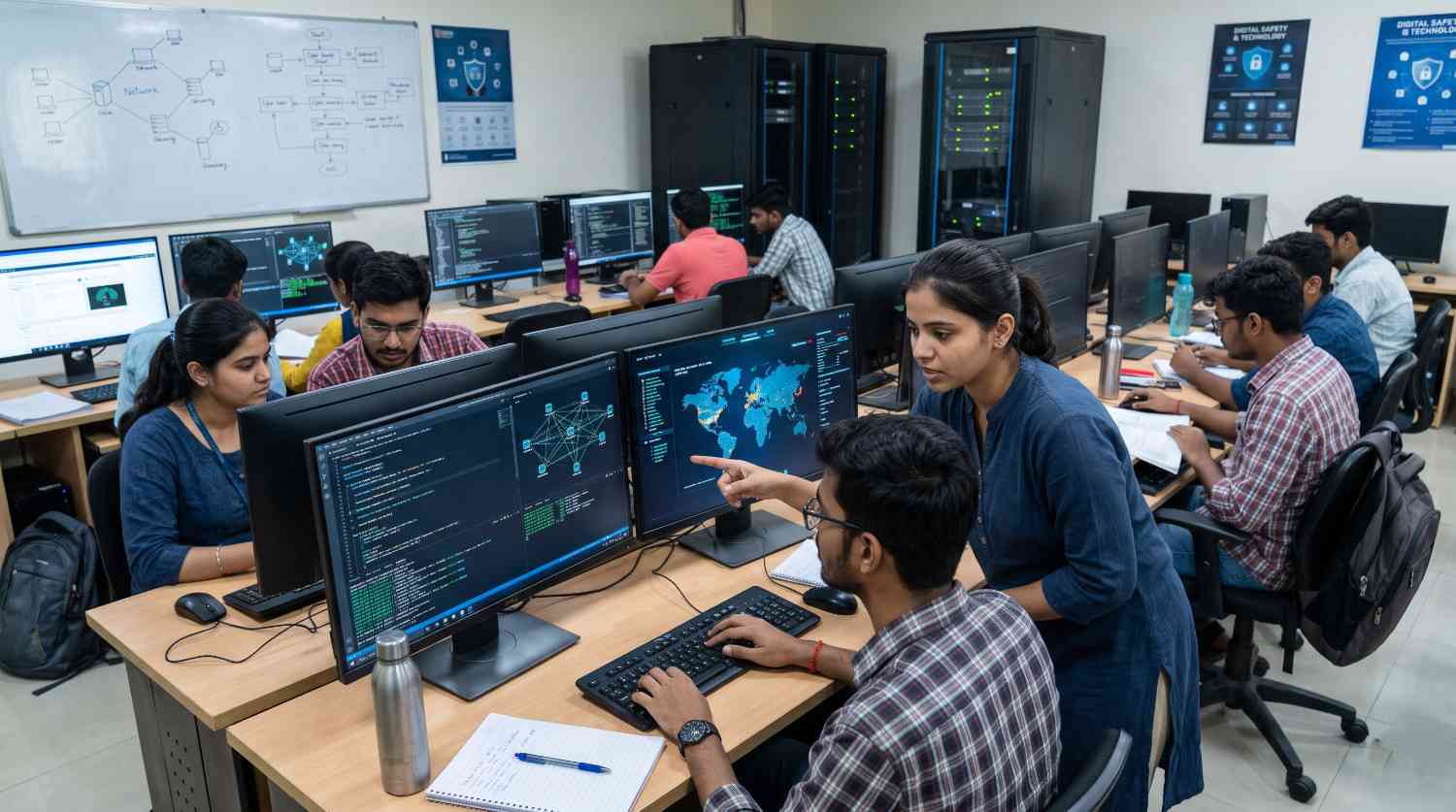
Metro University’s B.Tech. Cyber Security program deals with the following main areas: network & web security, ethical hacking, malware analysis, security operations, penetration testing, cloud security, and digital forensics. Along with this, published information on courses also describes that there is a ‘security lab’ in which students will have practical sessions on attack simulation, SIEM platforms, vulnerability scanners, and Capture the Flag exercises. The program also makes provision for specialized tracks, internships, and a final year capstone project.
Conclusion
Well, in my view, B.Tech Cyber Security is definitely a good career option in India. To begin with, the career suits people who love solving problems and protecting digital systems. You could have a career as an ethical hacker, SOC analyst, cloud security specialist, or digital forensic investigator, to name a few. Metro University has good technical subjects and practical resources. It is important to get lots of practice and work on projects.
Frequently Asked Questions
Q1. Is coding necessary for a career in cybersecurity?
Having some basic coding skills can be helpful (especially in languages like Python), but not all roles will require you to do lots of coding. Some roles within cybersecurity will focus more on monitoring, investigating, risk management, and compliance.
Q2. What is the difference between ethical hacking and cybersecurity?
Cybersecurity includes many areas. Ethical hacking is one area in which professionals will carry out a test on a system they have been given permission to test. This will help to find any vulnerabilities within the system so that they can be fixed before an attacker can exploit them.
Q3. Can a fresher become an ethical hacker after B.Tech Cyber Security?
Yes! Fresh graduates can look to get into an entry-level penetration testing role by learning about networking, Linux, vulnerability assessment, and security testing. This should be done in a hands-on way.
Q4. What is SOC analysis, and why is it important?
SOC analysis is a practice that involves monitoring your organization’s systems for any unusual activity. SOC analysts will look into these security alerts and help to identify potential attacks.
Q5. How does Metro University provide practical learning in B.Tech Cyber Security?
Students are provided with practical facilities such as security labs with simulated attacks, SIEM platforms, vulnerability scanners, and Capture the Flag activities. Students will have opportunities to develop specialist knowledge in specific areas of cybersecurity.
The graphics in these games are top notch. It feels like a premium experience from the moment you log in. I am staying with nustaronlinegamelogin for sure.
Quick access and no lag. I love how simple it is to get into the action. The best way to play is through ezebetlogin.
Downloading this app saved me so much time compared to browsing on mobile browsers. The navigation is super intuitive and I can jump straight to my favorite games in seconds. I also appreciate how they run weekly tournaments with massive prize pools. Trust me you will not regret giving this platform a spin. megapariapk